Hey👋,
I'm Giacomo

I help brands grow in the age of AI

Portrait of Giacomo Iotti with short dark hair and brown eyes, wearing a dark turtleneck and a dark checkered blazer against a dark background.

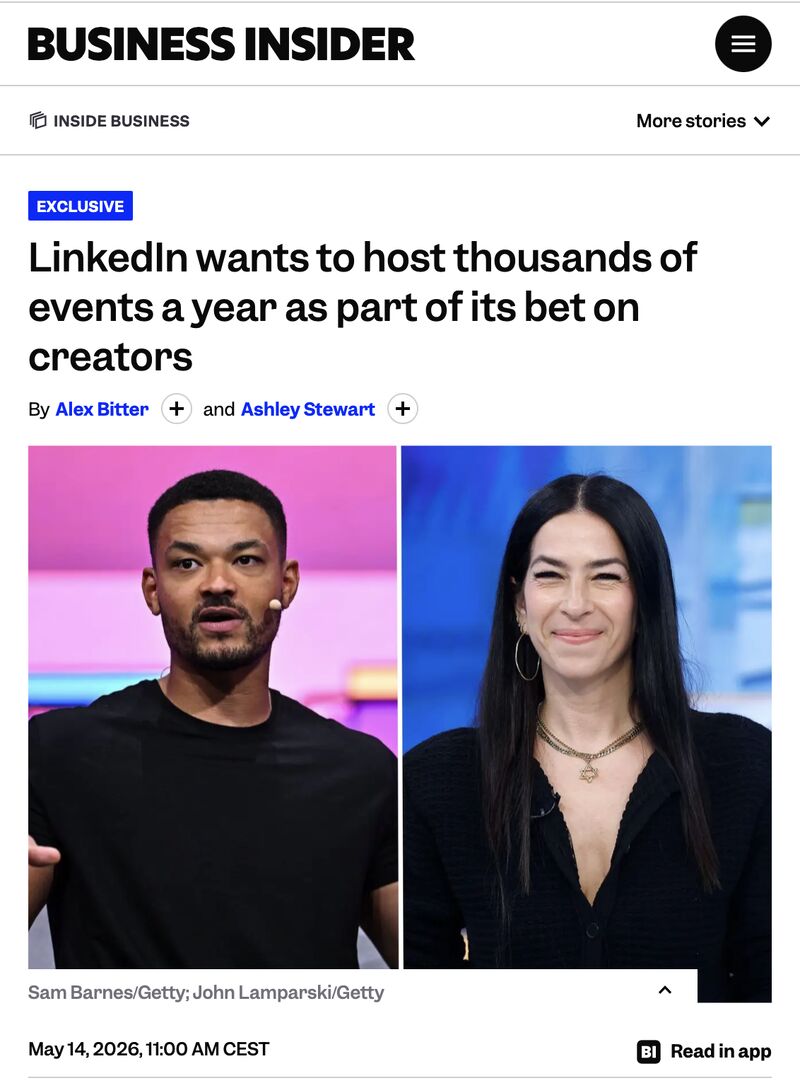
This is a great news! I'll be very happy to both host and be a guest.


LinkedIn is by far my favourite social media.
Or should I say social "network"?


It's probably the last actual social network alive and virtual events will bring its community to life.


Very curious to see how this will evolve!

...more
Business Insider article announcing LinkedIn’s plan to host thousands of creator events each year.
Open on LinkedIn
Expand on page
Portrait of Giacomo Iotti with short dark hair and brown eyes, wearing a dark turtleneck and a dark checkered blazer against a dark background.

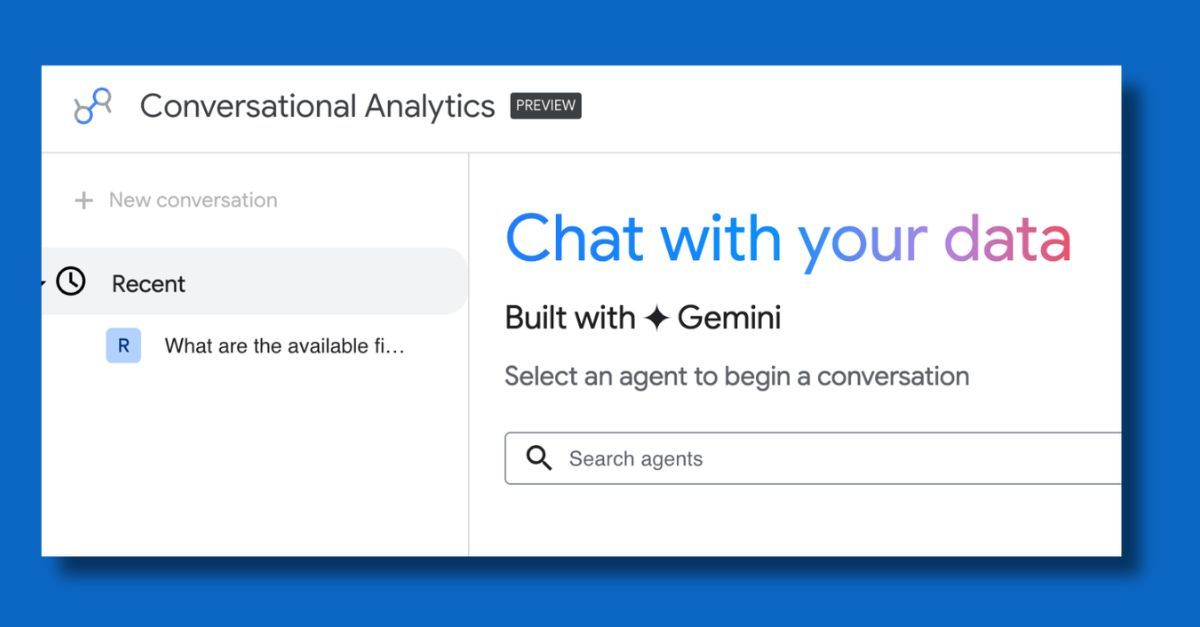
If you're a marketer, you HAVE to try this!


Now you can chat with your data directly from Google Data Studio!


Google Data Studio is the essential data analytics tool for digital marketing. Extremely fast and easy to use.


Now it integrates seamlessly with Gemini so you can talk to your data instead of just building dashboards!


I've always been skeptical of data analytics agents.


For example, the agents inside Google Analytics or Google Ads just don't work.
Same for Gemini in Google Sheets.
Same for some custom agents I've tried.


But this one went above and beyond my expectations!


Not only it answers simple questions perfectly (all numbers always match), but it's also able to make complex analysis and pull serious insights from your data.


Old workflow:
Marketer checks a dashboard, pulls some insights and write a commentary for the stakeholders.


New workflow:
The Data Studio agent pulls the insights and write a deep commentary for you.


And the insights are better than what you would have found by yourself.


I think it only works with Google BigQuery datasets, but it's extremely easy to set up. I literally took 10 minutes to set up one agent yesterday.


Even with basic setup and instructions, it found better insights than what I found by myself simply using the dashboard.


It'll be game changer.

...more
Google Conversational Analytics preview inviting users to “Chat with your data”, powered by Gemini.
Open on LinkedIn
Expand on page
Portrait of Giacomo Iotti with short dark hair and brown eyes, wearing a dark turtleneck and a dark checkered blazer against a dark background.

Friday is the new Saturday.


Nobody says it publicly. But Jamie Dimon did.


For many companies, remote work simply doesn't work. Full stop.


Why?


In this leaked audio from a JPMorgan town hall, Dimon colourfully addresses the problems:


1. Online calls are extremely distracting by design.
"You're on f**ing Zoom and you're doing the following: you're texting each other, sending emails, not paying attention, not reading your stuff."
I'm totally guilty of this.
Almost everyone I know is guilty of it.


2. Nobody knows where anyone is.
"I come in, and where's everybody else? They're here, they're there, the Zooms, the Zoomers don't show up, and they say they cannot get stuff done".
That is not flexibility.
That is chaos.
And chaos clearly doesn't run a great company, sorry.


3. Friday is the new Saturday.
"I call a lot of people on Friday and there’s not a goddamn person I can get ahold of.”
Sadly familiar.


4. Junior employees are paying the price.
That's quite straightforward.
How do younger employees learn from seniors they barely meet?
Today’s juniors are tomorrow’s leaders, and then what?


Then comes the brutal truth:
"If I was running a department of 100 people, I guarantee you, I could run it with 90".


Because those 10 are "here, there, don't show up, don't answer on Fridays", etc.


It's not AI making people redundant. It's this 👆.


Now my take:


Fully remote companies can work.


Because they are designed for it, with clear systems and accountability.


And most importantly, they attract a specific type of worker, who's highly reliable and independent.


The problem is when "traditional" employees at traditional companies start behaving like remote contractors, but still expect full-time job security.


Sorry, but you cannot have it both ways.


1. Meetings should always be in person when people are in the same city.
Remote meetings from two booths in the same office are corporate comedy 😂.


2. Leave 1 or 2 days per week meeting-free for deep work.
That work can sometimes be done better from home.


I’m not hardcore “5 days in the office”.
Working from home has real advantages.


But it needs structure, rules and serious leadership.


No surprise more and more companies are forcing staff back to the office.


I'm not a fan of "forcing", there are better ways, like what I just explained.


But hey, desperate times call for desperate measures.

...more
A lone employee waits at a Friday meeting table while ghostly remote colleagues are distracted by phones and screens.
Open on LinkedIn
Expand on page
Portrait of Giacomo Iotti with short dark hair and brown eyes, wearing a dark turtleneck and a dark checkered blazer against a dark background.

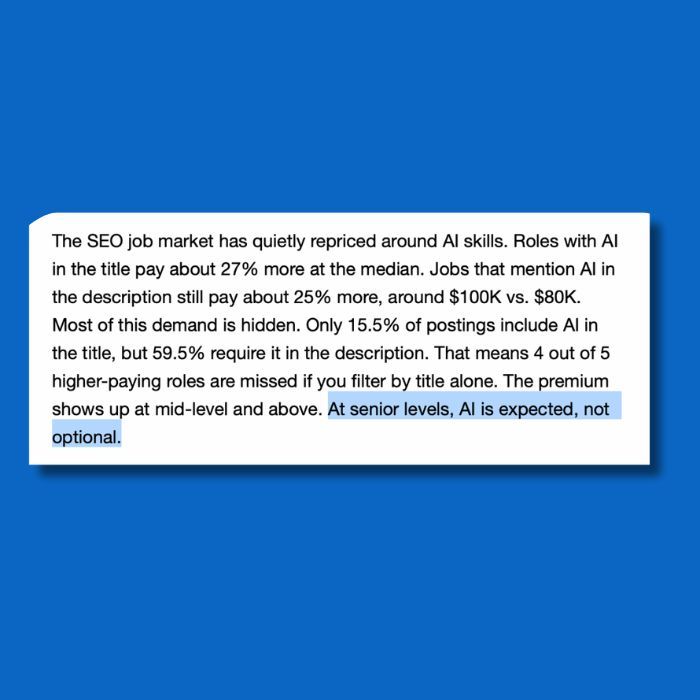
AI skills are not a plus. They're expected.


Pretty much like spreadsheets or slides.

‍

Source: TLDR Marketing Newsletter

...more
Highlighted analysis says jobs with AI in the title pay 27% more and senior-level AI skills are expected, not optional.
Open on LinkedIn
Expand on page
Portrait of Giacomo Iotti with short dark hair and brown eyes, wearing a dark turtleneck and a dark checkered blazer against a dark background.

Elon Musk is the richest man alive.
Sam Altman is god-like powerful.
Mark Zuckerberg can make your business disappear.
Dario Amodei can start or stop a war.


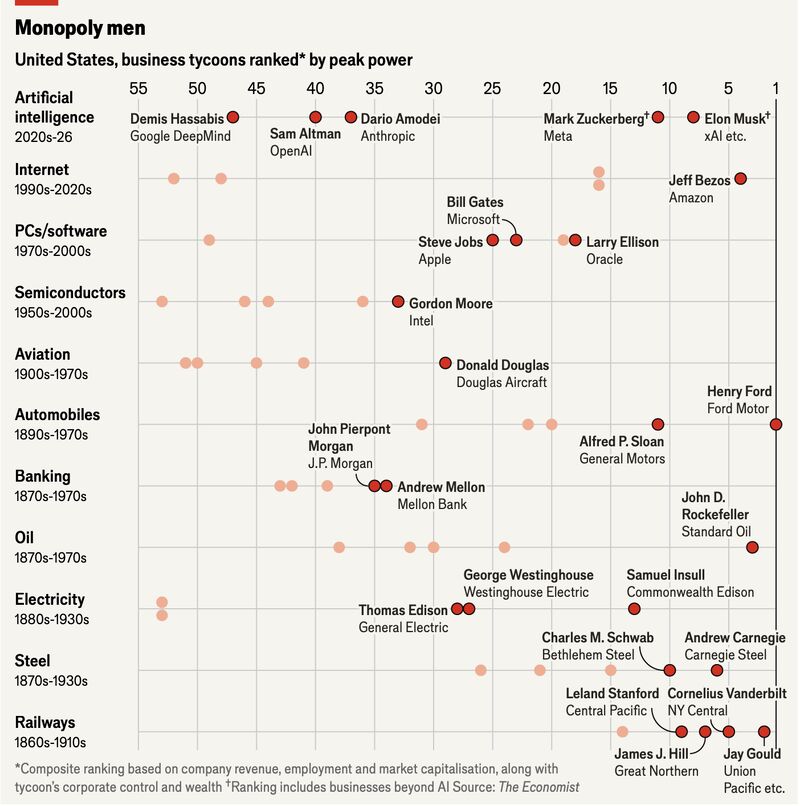
But none of them is as powerful as Henry Ford or Rockefeller were at their peak.


Today, it feels like a handful of men can shape the destiny of the entire world.


But this is hardly new.


The Economist made an estimate of who are the most powerful (American) men in history.


Turns out, Henry Ford has been the most powerful of all!


He employed an insane amount of people: about 0.15% of the American population.


His wealth represented over 1% of American GDP.


Plus, he had full control over his huge company.


Jeff Bezos is the only person alive who comes close.


Amazon employs more than a million people, and Bezos is obviously extremely wealthy. But he does not control Amazon the way Henry controlled Ford.


The same applies to Elon Musk, despite his enormous wealth.


AI bosses rank much lower, below position 35.


The bottom line is that we are not experiencing something new.


Every major technological revolution created its own tycoons, who accumulated amazing wealth and power.


One can argue they accumulate too much power and wealth.


But some of these people built the systems we now take for granted.


Without Ford, we wouldn't be driving cars.


Without Jay Gould, we wouldn't travel by train either.


AI and digital technology have not reached their full impact yet.


Only later will we understand the real historical importance of Bezos & Co.

...more
Economist ranking of powerful US business tycoons places Henry Ford first, John D. Rockefeller third and today’s AI leaders outside the top ten.
Open on LinkedIn
Expand on page
Portrait of Giacomo Iotti with short dark hair and brown eyes, wearing a dark turtleneck and a dark checkered blazer against a dark background.

ChatGPT will break the Google-Meta ad duopoly.


And it’s about time!


Many argue that ChatGPT ads are just the natural evolution of search ads in the AI era.


And as long as Google doesn’t mess up, OpenAI will struggle to compete on the same turf.


But the numbers tell a different story.


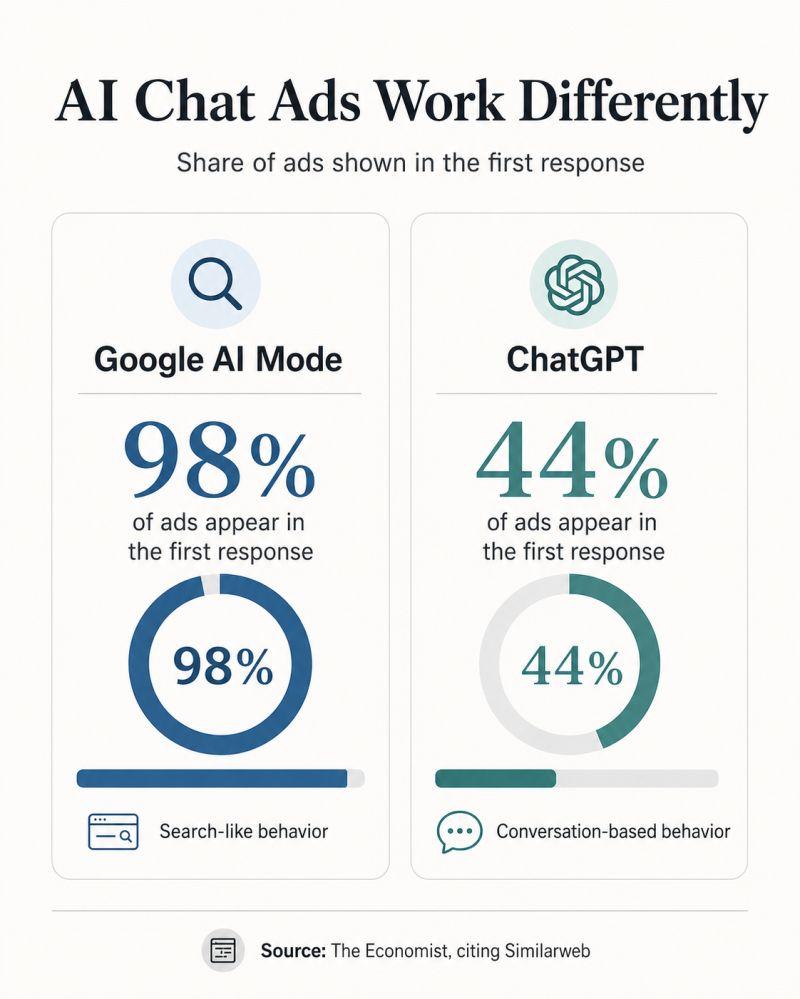
ChatGPT ads are a completely different beast than search ads.


In traditional search, ads usually appear immediately after the query.


Google’s AI Mode does the same.


98% of AI Mode ads appear after the first prompt.


But ChatGPT behaves very differently.


Only 44% of ChatGPT ads appear after the first prompt. More than half appear later, within an ongoing conversation.


They naturally blend in, showing up only when the intent is the highest.


ChatGPT conversations with ads last around 20 turns on average. Exactly the same as those without ads.


72% of GPT ads are not shown on the final message. Users usually keep chatting after seeing an ad.


On average, they continue for more than four additional turns.


In other words:
ads don’t kill the user experience, unlike many might fear. They enhance it. And there’s room for many more.


Lately OpenAI launched an ad manager, CPC bidding and it’s working on a pixel.


We’re literally witnessing the rise of a brand new advertising channel.


Not search, not social, not display.


Something completely new.


Today, only around 1-2% of AI conversations show ads. So the headroom is massive!


This is good news for marketers who can finally diversify their media buying away from the big two.


Exciting times ahead!


Source: Similarweb

...more
Comparison showing 98% of Google AI Mode ads appear in the first response versus 44% of ChatGPT ads, which appear later in conversations.
Open on LinkedIn
Expand on page
Portrait of Giacomo Iotti with short dark hair and brown eyes, wearing a dark turtleneck and a dark checkered blazer against a dark background.

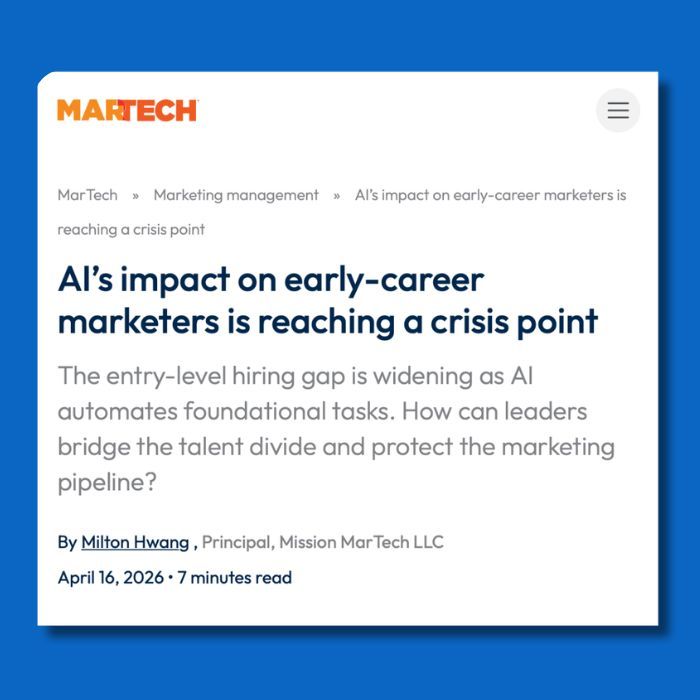
"a marketing manager’s tasks are 90% disrupted from a skill perspective."


Sure. If by “skills” you mean moving files from one folder to another 😅


AI is undeniably impacting entry-level jobs.


Report after report says the same thing.


But in marketing, AI is an opportunity, not a threat.


I can 100% guarantee that.


Marketing teams can now produce 5x the output.


This means:
• more creative routes
• more ideas
• more campaigns launched
• more channels to work with


But yes,
fewer files to move around,
fewer operational layers,
fewer repetitive tasks,
possibly fewer agencies involved.


And this is good news!


Especially for in-house marketers.


Entry-level roles built only on repetitive execution that senior people couldn’t bother doing will disappear. And again that is good news.


It was low-quality work, sometimes even exploitation. We're better off without.


What's actually happening in marketing:


AI is lifting the veil on the work that actually mattered.


Nonsense work is being exposed.


If your job is to behave like a robot, executing tasks without judgment, taste, or thinking…


Sorry, AI is coming for you.


But if you have always done quality work, quality study, quality projects etc...


You are not in danger and never will be.


Graduates included.

...more
MarTech article headlined “AI’s impact on early-career marketers is reaching a crisis point” about automation widening the entry-level hiring gap.
Open on LinkedIn
Expand on page
Portrait of Giacomo Iotti with short dark hair and brown eyes, wearing a dark turtleneck and a dark checkered blazer against a dark background.

AI in marketing, just hype or ROI driver?


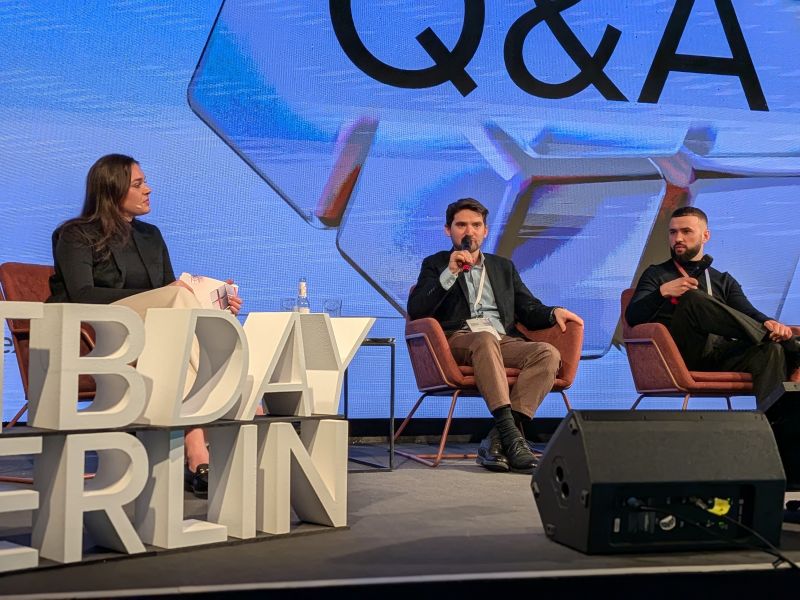
That's what we debated yesterday at RTB House Day Berlin.


I had a great conversation with Stefan Bubolz and Ruppert Bodmeier, moderated by Katharina Jäger.


As always, truth is somewhere in the middle.


AI in marketing is a genuine revolution.


But the space is drowning in buzzwords and hype. Being able to separate real ROI from noise is what matters now.


Here's what we agreed on:


AI for creative and design is already delivering strong ROI.
Same for vibe-coding internal tools; real time and cost savings, today.


Performance marketing has been using AI for at least a decade, long before anyone called it "AI." Bid optimisation, audience modelling, dynamic creative, none of this is new. Just because the label changed doesn't mean it's a breakthrough. It's a natural evolution of foundations laid in the 2010s.


Where it gets murkier: AI agents and assistants in online commerce.


Amazon and Walmart are seeing impressive results from their AI shopping assistants. But let's be honest, they're the exception, not the norm. Not every retailer is a multi-billion dollar company with near-unlimited tech budgets. 💵


That last point resonated particularly well with the audience. 😅


If anyone wants to discuss AI in marketing further, my DMs are open :)


Until next time, Berlin!


Photo credits: Alexander Kuczminski

...more
Three speakers discuss AI in marketing on stage during a Q&A at RTB House Day Berlin.
Open on LinkedIn
Expand on page
Portrait of Giacomo Iotti with short dark hair and brown eyes, wearing a dark turtleneck and a dark checkered blazer against a dark background.

A chatbot made Amazon $12 billion last year.


Not a new product line. Not a new flashy campaign.


An AI chatbot called Rufus.


So forget AI productivity and AI workflows.


AI is now a revenue machine 💵.


On their Q4 2025 earnings calls, Amazon and Walmart dropped a signal that every marketer should pay attention to.


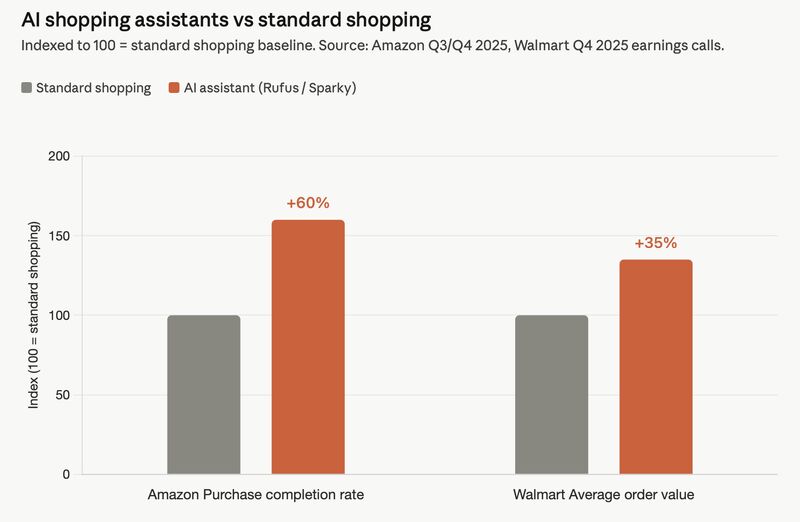
Amazon said its AI assistant Rufus drove nearly $12B in incremental sales. Rufus users were 60% more likely to complete a purchase.


Walmart said its AI assistant Sparky users place orders with 35% higher average order value.


Same customers.
Same products.
Same prices.


Just an AI assistant in the middle.


+60% purchase completion. +35% order value.


Yes, $12B is still small versus Amazon's ~$588B in non-AWS revenue.


But it's already significant.


For giants like Amazon and Walmart, this makes perfect sense.


Massive catalogues -> massive training data.
Millions of SKUs -> endless product questions


AI assistants are a no-brainer.


But their success shouldn't trigger FOMO in smaller merchants.


Not everyone is Amazon or Walmart.


If you can build your own Rufus in-house, great.


But most companies can't and probably shouldn't try.


The smarter move is to embrace AI traffic and referrals from generalist bots like ChatGPT.
Steer the conversations, build a native app.


Don't forget, ChatGPT is used by roughly 12% of the world's population!


It's a gold mine.


Don't fight the shift. Ride it.


The commercial opportunity is too big to ignore.


Chart courtesy of Claude.

...more
Chart showing AI assistants lift Amazon purchase completion by 60% and Walmart average order value by 35% versus standard shopping.
Open on LinkedIn
Expand on page
Portrait of Giacomo Iotti with short dark hair and brown eyes, wearing a dark turtleneck and a dark checkered blazer against a dark background.

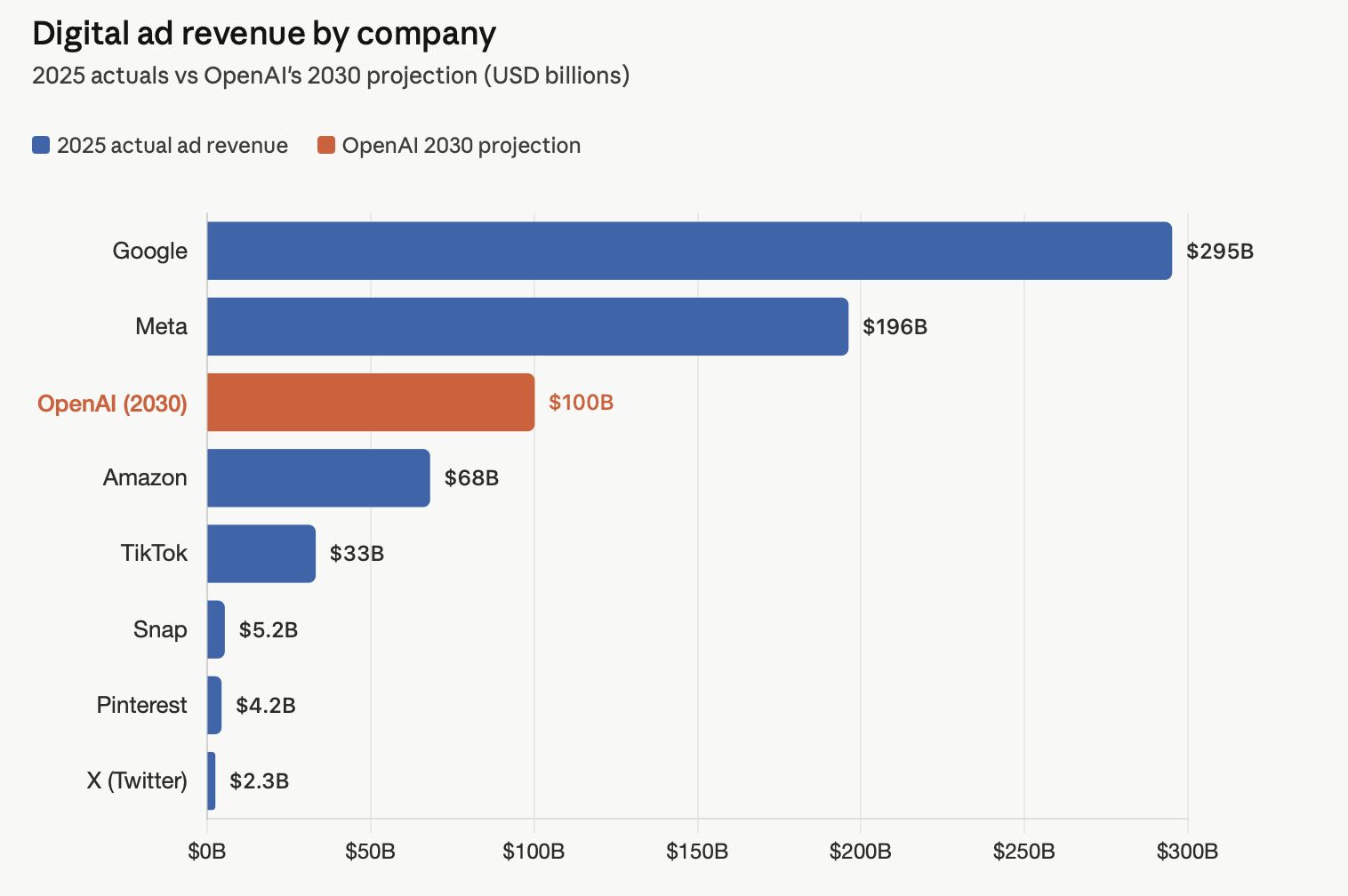
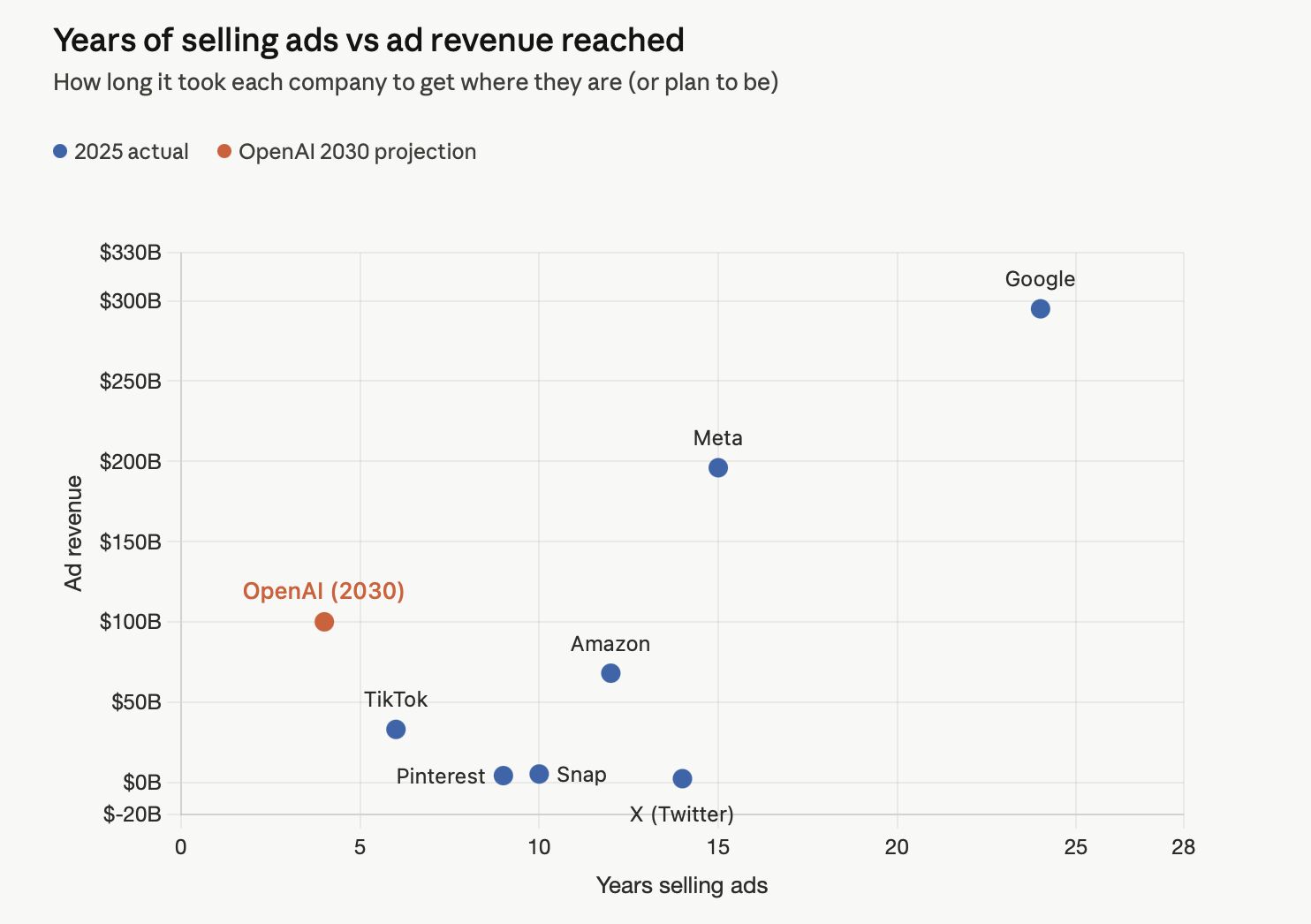
It took Meta 15 years to build a $200B ad business.

‍

OpenAI plans to get halfway there in 4. 🤯

‍

Pinterest has been selling ads for 9 years.

They made $4.2B last year.

‍

Snap has been at it for 10 years.

~$5.2B in 2025.

‍

OpenAI plans to reach half of Meta's size by 2030.

Starting from basically zero!

‍

Here's their roadmap, leaked to investors via Axios reporting:

2026: $2.5B

2027: $11B

2028: $25B

2029: $53B

2030: $100B

‍

That's a growth curve with no precedent in the history of online advertising.

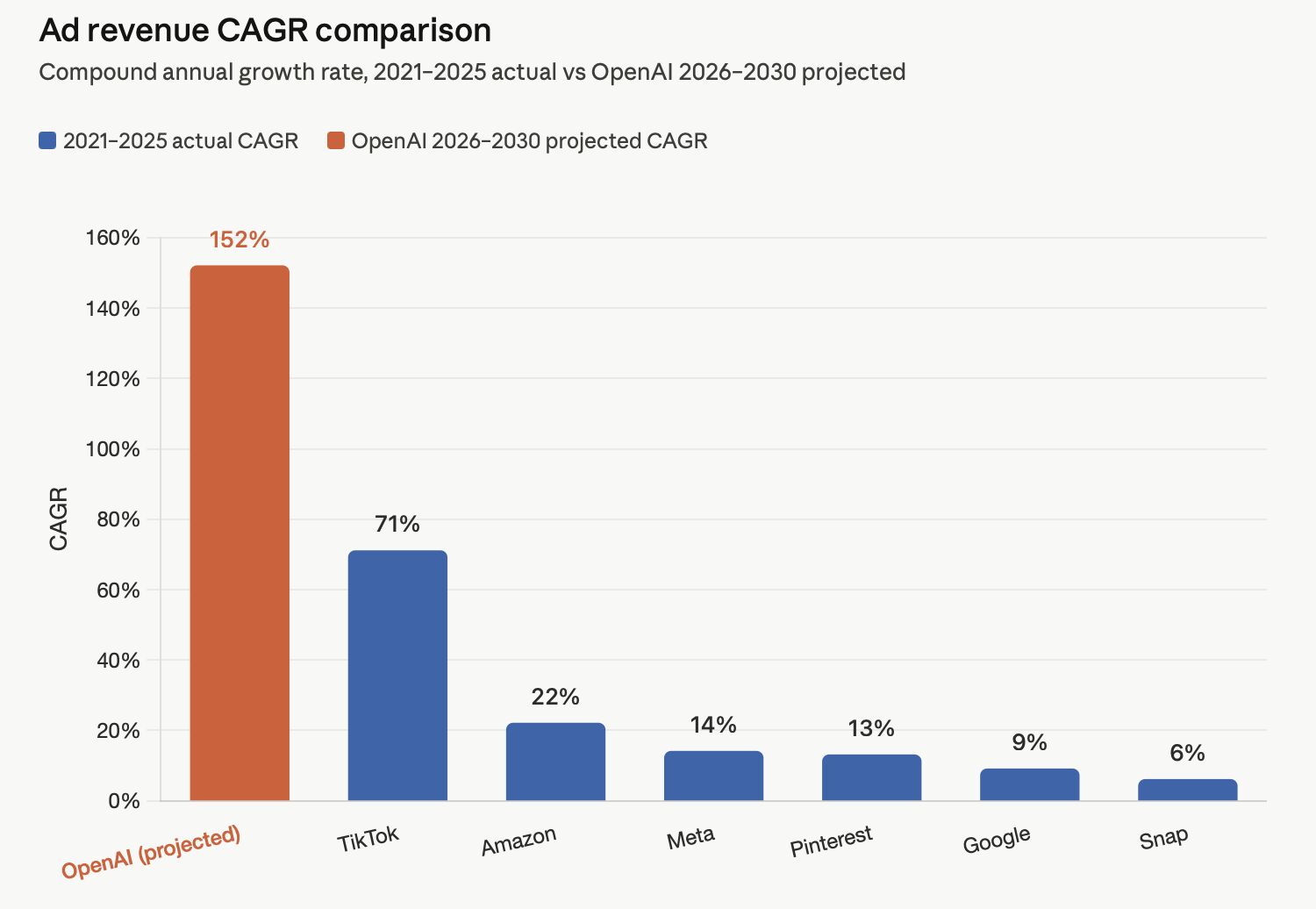
OpenAI is forecasting a 152% ad revenue CAGR over four years.

More than double TikTok's, the fastest-growing ad platform in history so far, which grew at an estimated 71% CAGR between 2021 and 2025.

‍

But it gets even more interesting.

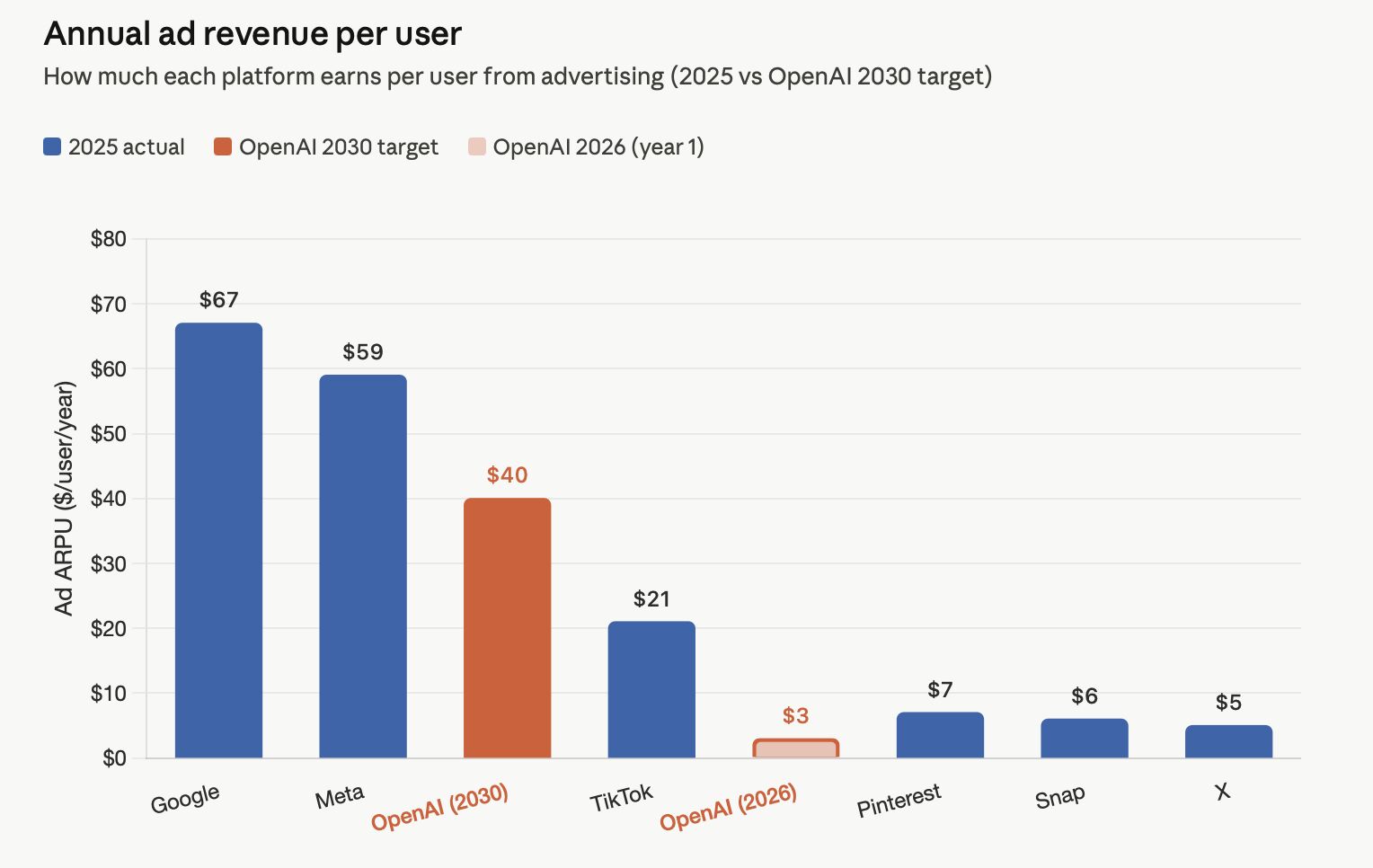
I did the math on revenue per user.

‍

ChatGPT reported 900 million weekly active users as of February this year.

Ads only run on the Free and Go tiers, roughly 95% of users, ~850M.

That means OpenAI would earn around $3 per user in 2026.

‍

They target 2.75B weekly users by 2030, so ~$40 per user.

For reference,Meta currently earns ~$59 per user.

So OpenAI's 2030 target requires 68% of Meta's current monetisation rate.

‍

Ambitious is an understatement.

But not impossible, given the breakneck user growth ChatGPT has already experienced.

‍

Plus, OpenAI ads also offer something other platforms don't.

The depth of data it collects about its users is unprecedented, and extremely valuable to advertisers.

‍

Imagine your personal assistant and mentor selling your conversations to the highest bidder. That's essentially what's happening.

‍

But the real question isn't whether $100B is achievable.

‍

It's what happens to the rest of the ad industry when 2.75 billion people are asking an AI instead of scrolling a feed or typing a search query.

‍

Sources: Axios, Reuters, TechCrunch and full-year earnings report.

Charts courtesy of Claude.

...more
Bar chart compares ad revenue CAGR: OpenAI’s projected 152% for 2026–2030 versus TikTok’s 71% and others below 22%.
Bar chart compares annual ad revenue per user: OpenAI targets $40 in 2030, versus Google at $67 and Meta at $59 in 2025.
Bar chart compares 2025 digital ad revenue: Google $295B, Meta $196B and OpenAI’s $100B projection for 2030.
Scatter plot compares years selling ads and revenue, showing OpenAI targeting $100B after four years by 2030.
Bar chart compares ad revenue CAGR: OpenAI’s projected 152% for 2026–2030 versus TikTok’s 71% and others below 22%.
Open on LinkedIn
Expand on page